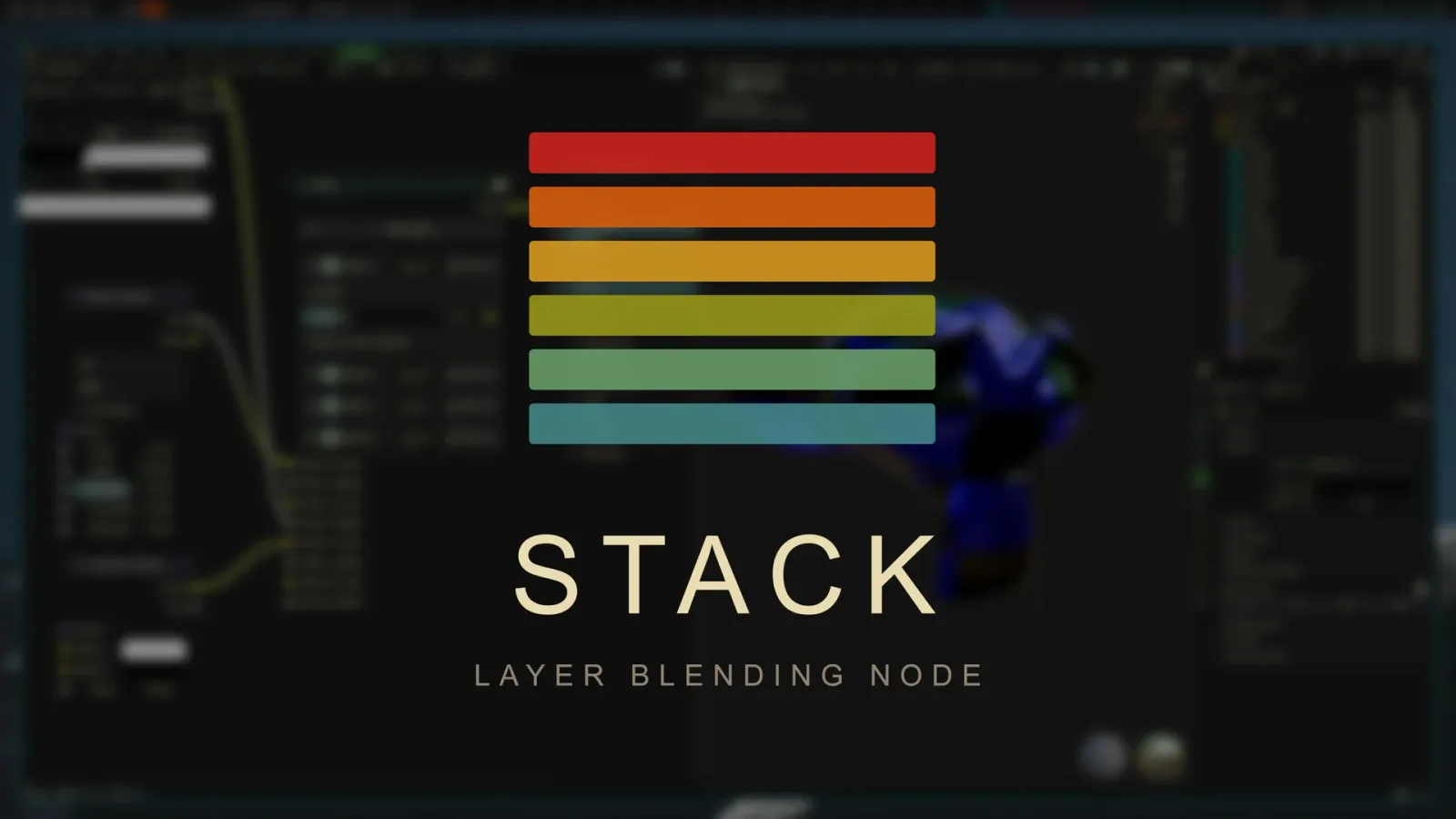
Stack is a Blender add-on built around a layer-blending node. The Blender Extensions listing describes it as a node with blend modes, opacity, and masking. Those controls are relevant when you want to combine texture layers and adjust how each one contributes to a material. The listing names NXSTYNATE as its maintainer.
How its controls fit a material workflow
A blend mode changes how a layer combines with the layers beneath it, opacity adjusts its strength, and a mask limits where it contributes. For example, you could combine a base texture with a color or detail variation, then reduce that variation or confine it to selected areas. The catalogue record confirms these controls but does not enumerate every blend mode or specify a layer limit.
Stack may suit artists who already organize material work around texture layers. Its controls are grouped in a purpose-built node, which gives you a place to adjust how layers combine. Check the installed version's layout and control names, and test any blend behavior your project depends on with the textures you plan to use.
Version and compatibility
The Blender Extensions catalogue lists Stack version 1.0.4 for Blender 4.5.0 or later. Its record names NXSTYNATE as maintainer and gives the license as GPL-3.0-or-later. Check compatibility before adding it to a shared project, especially if collaborators use an earlier Blender release. The version history and the developer's issue tracker are linked from the official listing.
Test it with your textures
Try Stack on a small material first: connect the textures you expect to layer, adjust opacity and masking, then save and reopen the file. Check the result with the image channels your project needs, including alpha if it matters. A reviewer on the Blender Extensions page reported being unable to get an alpha channel for animated textures. That is one user's report, not proof of a universal limitation, so test your own setup before relying on Stack for an alpha-dependent workflow.