Turn motion into sound
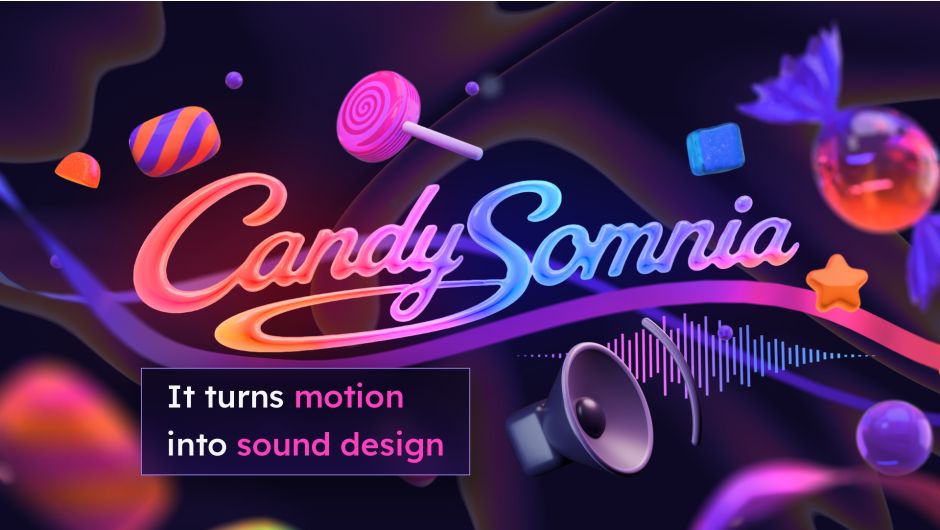
Candysomnia is an After Effects effect that generates sound effects from movement in a composition. Apply it to an adjustment layer over the animation and press Generate. It analyzes the frames for events such as elements appearing, starting, crossing the frame, or landing, then synthesizes sound for those moments. The audio plays in preview and is included in the comp render. Existing audio on the effect’s layer continues to play alongside Candysomnia’s sounds.
The workflow suits motion designers adding sound to UI and product animation, logo stings, explainers, title sequences, or social cuts.
Choose a sound style
The same detected moments can be rendered in six styles:
- Candy: bright pings and bells.
- Dream: soft, low sounds with a long tail.
- Wood: marimba and plucked-string sounds.
- Bubbles: pops and soft sine tones.
- Glitch: chopped, rewound, scattered sounds.
- Foley: clicks and rustles without pitched notes.
Sync and shape the sound
Select a music layer to have notes follow its key and the chord playing at each moment. You can also set the Key, Octave, and Octave Mode yourself. Sensitivity controls how small a movement can trigger sound. Changing the Seed keeps the detected moments but gives them different notes.
Movement across the frame affects stereo placement; a fast pass can trigger a whoosh and a hard landing a hit. Accents, Risers, Downers, Shimmers, Swarm, Transitions, Body, Whooshes, and percussion each have their own switch and level. Reverb, Delay, and Stereo Width affect the overall sound. In a 3D comp, sound can move with a layer relative to the camera; a Manual Cue makes the Downer follow the candy left, right, near, and far from the comp camera's point of view.
Generate and revise
Generate runs in the background, with progress shown in Effect Controls and over the frame. The viewer overlay marks the motion Candysomnia detects with arrows. It appears while the effect is selected and does not render.
Changes to the style, sensitivity, or layer levels take effect on the next preview without analyzing again. If the picture or timing changes, press Generate again; it counts only the changed frames. Candysomnia uses classic optical flow and synthesized sound, with no included sound library or samples. Processing runs locally on the CPU, without an internet connection, GPU, or upload.
Compatibility, trial, and licensing
The listing specifies After Effects 2023 through 2027. The trial includes the full effect, but until a license is entered, a voice announces “Trial version of Candysomnia” over the sound twice a minute in both preview and render.
The EULA licenses one copy for one user on one computer at a time and permits one archival copy. Use by multiple users or on multiple computers requires an appropriate license for each user and copy.