RE:Vision Effects RE:Lens converts lens projections, corrects distortion and stabilizes 360 VR and fisheye footage. RE:Lens versions 2.6 and later support 180 VR stabilization in Premiere Pro; feature availability varies by host.
Convert projections and correct lens distortion
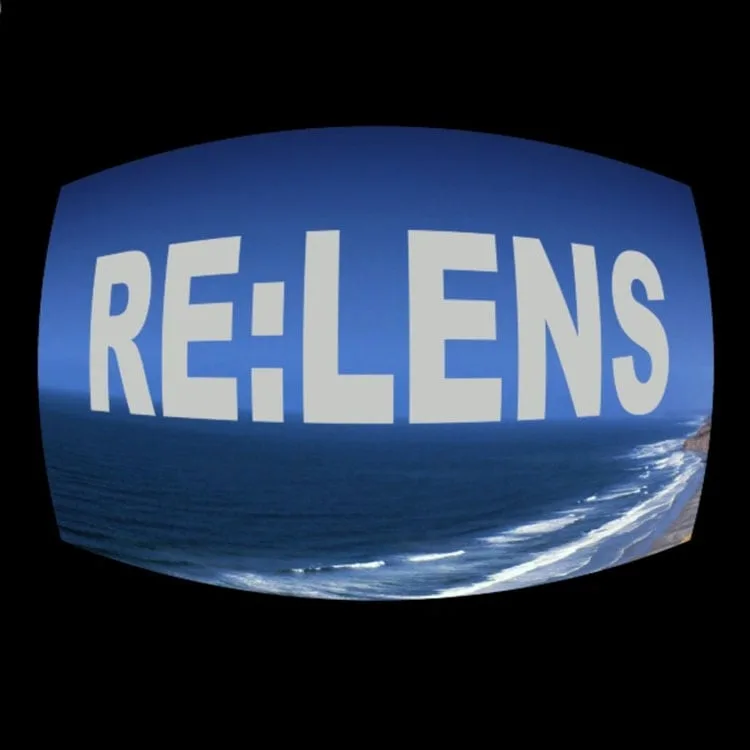
RE:Lens converts among rectilinear, equirectangular LatLong, fisheye, super-fisheye, super-wide-angle zoom, little planet, mirror-ball and parabolic lens-mirror projections. For dome projection, RE:Lens converts 180° or 360° input to fisheye. You can turn fisheye footage into a rectilinear view, correct perspective, and address pincushion or barrel distortion. The tools also reduce chromatic distortion and color fringing from curved lenses, including mirror-based systems.
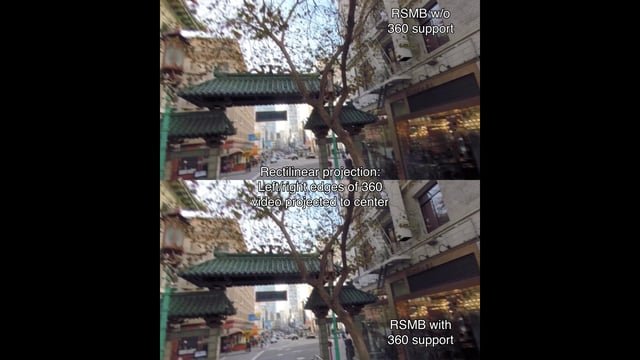
For 360 work, RE:Lens can convert LatLong footage to a 2D view whose point of view can be edited and animated. Motion graphics, titles or 3D material can then be projected back onto the non-rectilinear source. It also supports high-resolution panoramas and animated virtual camera moves. In super-wide outputs, an unflatten option can reduce over-stretched corners.
RE:Lens can convert single-camera super-fisheye footage to LatLong for 360 viewers, often eliminating stitching when the lens, camera setup and footage are suitable.
Spherical stabilization
The spherical stabilizer tracks global camera orientation in 360 VR and fisheye footage. In Premiere Pro, RE:Lens versions 2.6 and later also support 180 VR stabilization. Press Track to analyze a shot, then adjust the stabilization profile if needed. The catalog lists version 2.6.0, which added spherical stabilizer support in Premiere Pro; the publisher's Premiere Pro release notes list version 2.6.1, last updated July 29, 2026.
Hosts and compatibility
RE:Lens supports After Effects CS6 through 2026 and Premiere Pro CS6 through 2026; Premiere Pro CS6 requires version 6.0.5 or later. Other supported hosts include DaVinci Resolve 15.1.1 and later, Final Cut Pro, Motion, Flame, Fusion Studio, HitFilm, Natron, Nuke, Scratch and Silhouette. The publisher's Resolve page lists version 2.6.3, last updated April 16, 2026, and notes a memory leak when running the stabilizer in Resolve's Fusion page; it recommends the Color page or the Fusion app. Feature availability varies by host, so check compatibility for your host version and the tools you plan to use.
RE:Lens suits editors and compositors who need to reshape wide-angle or spherical footage, stabilize 360 or fisheye shots, or move between panorama and 2D views. The catalog marks RE:Lens free; the publisher offers a free trial, with rendered images watermarked without a purchased license and registration key.