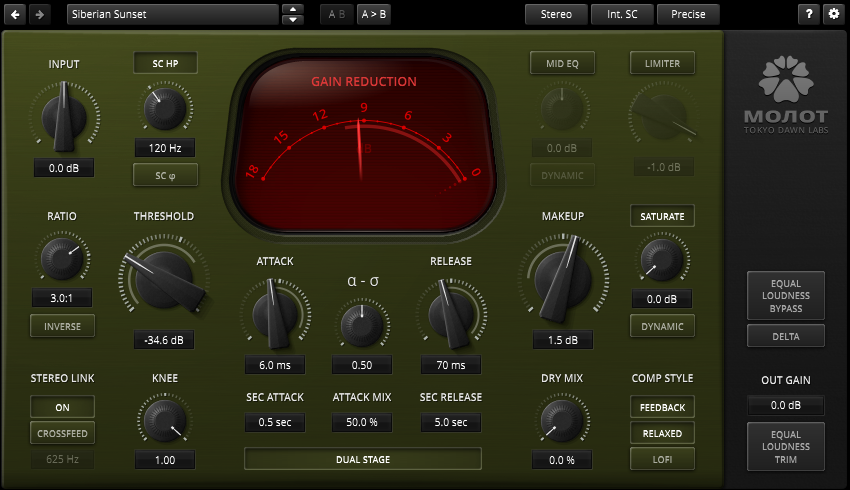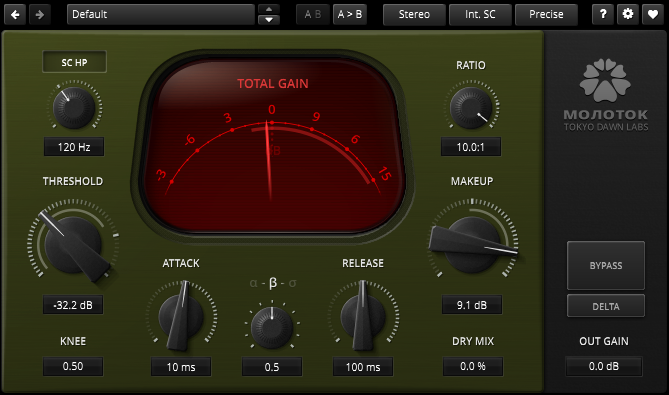
TDR Molotok is a freeware dynamics compressor and a simplified version of Molot GE; both use the same algorithms. It offers 11 compression flavours for track work such as adding impact to drums, thickening vocals, and shaping guitar or bass. Tokyo Dawn Labs says Molotok does not model a particular vintage unit, though its sound draws on musical traits inspired by vintage equipment.
Shape compression on tracks and buses
Threshold sets the input level around which gain reduction changes. Set it just below the loudest peaks to suppress them, just below average peaks to shape transients, or just above the average signal level to reduce louder portions. The ratio ranges from 1.1:1 to 10.9:1. Molotok's soft knee can apply some compression even when the input is far from the threshold. The knee control sets how quickly compression reaches its full ratio. The manual describes a knee value of 0.5 as the most natural; lower values produce lighter compression, while higher values increase the curve's bend and can add a slight gain boost just before reduction starts. Attack sets the speed of gain reduction; shorter settings prevent more transients from passing through but increase distortion, and values below 1 ms make the compressor a distortion generator.
The alpha, beta, and sigma weighting control changes the compressor's response. Alpha reacts almost immediately. Beta uses a dual-stage release intended to reduce over-compression artifacts on complex material. Sigma delays the compression so more of the initial attack passes through. The manual suggests alpha or sigma for individual tracks and beta for bus compression.
Manage the trigger and blend
The sidechain high-pass filter can keep low frequencies from triggering compression too strongly and pulling down mids or highs. Dry Mix blends the compressed signal with the untouched input, which can bring some transients back after heavier compression. Out Gain lets you compensate for level changes.
Processing modes and compatibility
Choose Live for zero-latency tracking, Eco when CPU use is limited, or Precise, the default high-fidelity mode. Molotok runs inside a DAW or another plug-in host. Tokyo Dawn Labs lists VST2, VST3, AU, and AAX formats, with 32-bit and 64-bit entries in its compatibility table. The product page states Windows 7 or later, macOS X 10.9 or later, and OpenGL support; check the entry that matches your host and system.
TDR offers Molotok through TDR Collector and direct downloads, including a Windows installer, a Windows no-installer archive, and a macOS package. TDR lists it as freeware, and Collector asks you to accept the freeware EULA before installation.