Mesh XR brings VR mesh editing into Blender through its built-in OpenXR support. It is designed for PCVR with two tracked controllers: one points, selects and edits, while the other carries a compact tool menu. Blender remains the main application, with common modeling actions available from the headset.
Mesh editing and scene movement
Mesh XR supports object and face selection, object transforms along the X, Y and Z axes, and direct scaling of selected faces. You can extrude, bevel, inset or delete faces, and add basic shapes such as cubes, spheres, cylinders, cones, toruses and planes. Distance-aware transform handles remain easy to target from farther away.
For navigation, the controller thumbsticks support free flight through large scenes. You can also grab empty space and pull yourself through the scene, choose snap or smooth turning, and adjust movement speed or use turbo flight. The add-on includes session-local Undo and Redo, saving the current .blend project from VR, and a choice of left or right dominant editing hand.
Armatures and weight painting in version 0.7.6
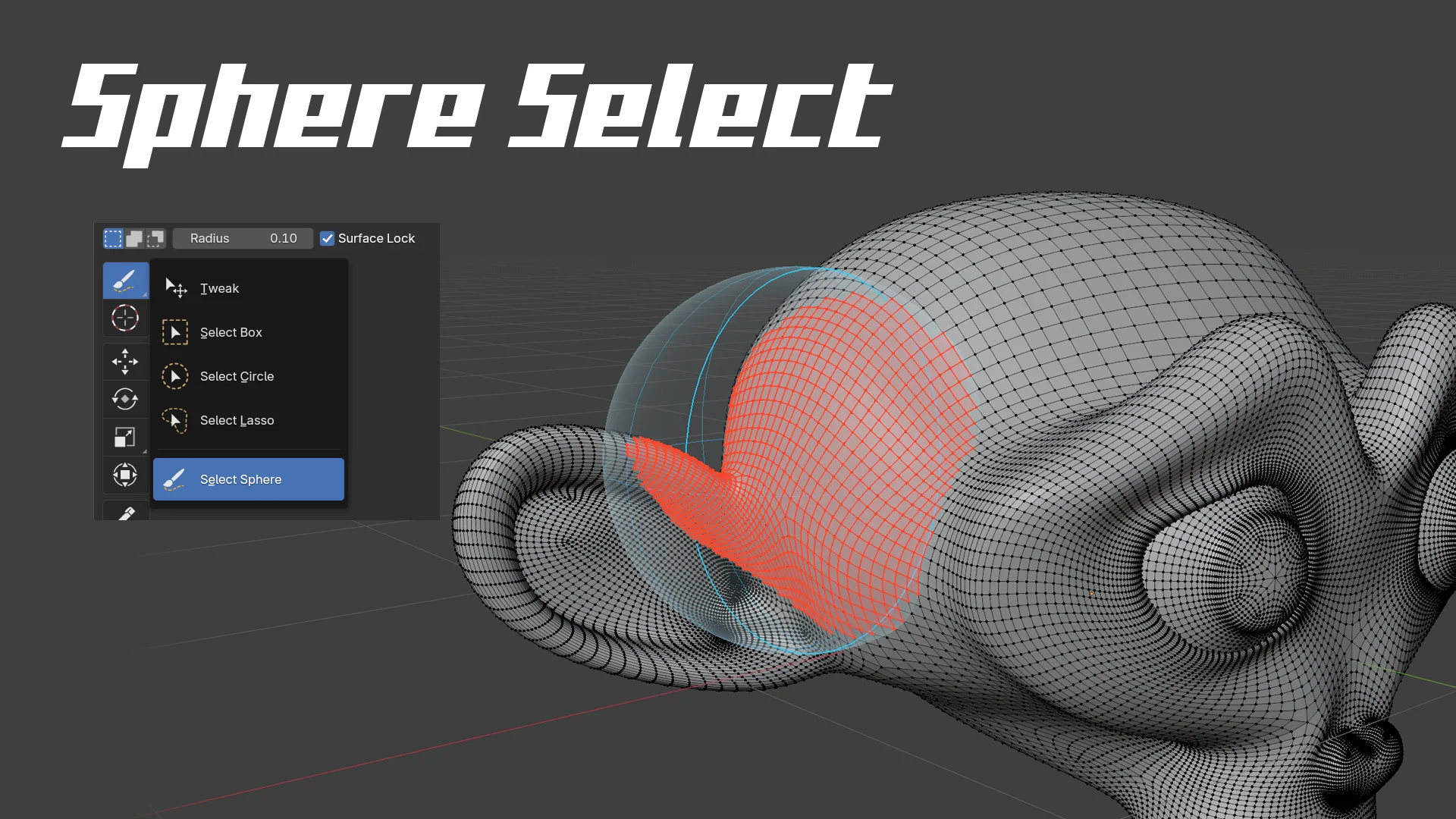
Version 0.7.6 adds broader controller selection and transformation for mesh elements, objects, armatures, edit bones and pose bones. Grip grabs move selected geometry or objects; Trigger-operated Move, Scale and Rotate tools also work with armatures and bones. The selection tool responds to Blender's current mode, including vertex, edge, face, armature and pose-bone selection.
Armature creation no longer requires a humanoid-shaped mesh. The release adds VR controls for selecting and editing bones, along with creation, duplication, extrusion, subdivision, symmetry, parenting, roll, naming and visibility. Weight Paint is a Blender mode in Mesh XR's mode selector, with controller-driven painting and erasing, vertex-group selection, and adjustable brush strength and radius. A Rigging menu provides parenting choices such as Automatic Weights, Empty Groups and Clear Parent (Keep Transform).
Requirements and workflow fit
Mesh XR requires Blender 4.2 or later with OpenXR support, a compatible PCVR headset and two tracked controllers. Headset and controller compatibility depends on the OpenXR runtime and the controller profiles it exposes. The published package lists Windows and Linux x64. Mesh XR focuses on VR mesh editing and rigging; its listing says it is not a replacement for Blender's complete desktop modeling workflow. Existing material and UV commands remain available in collapsible advanced panels.
The extension is free and open source under GPL-3.0-or-later. Its listing says the Files permission covers loading texture images and saving Blender projects, while the Network permission is for optional local SteamVR hand input. Check the Blender Extensions listing for the current package details and the project changelog for release changes.