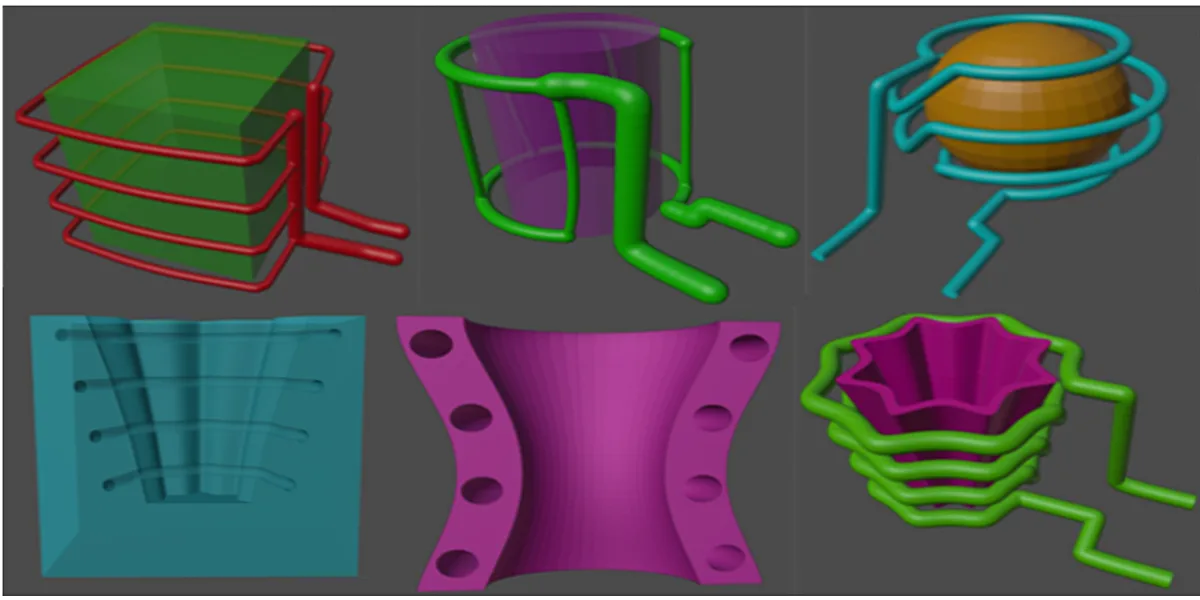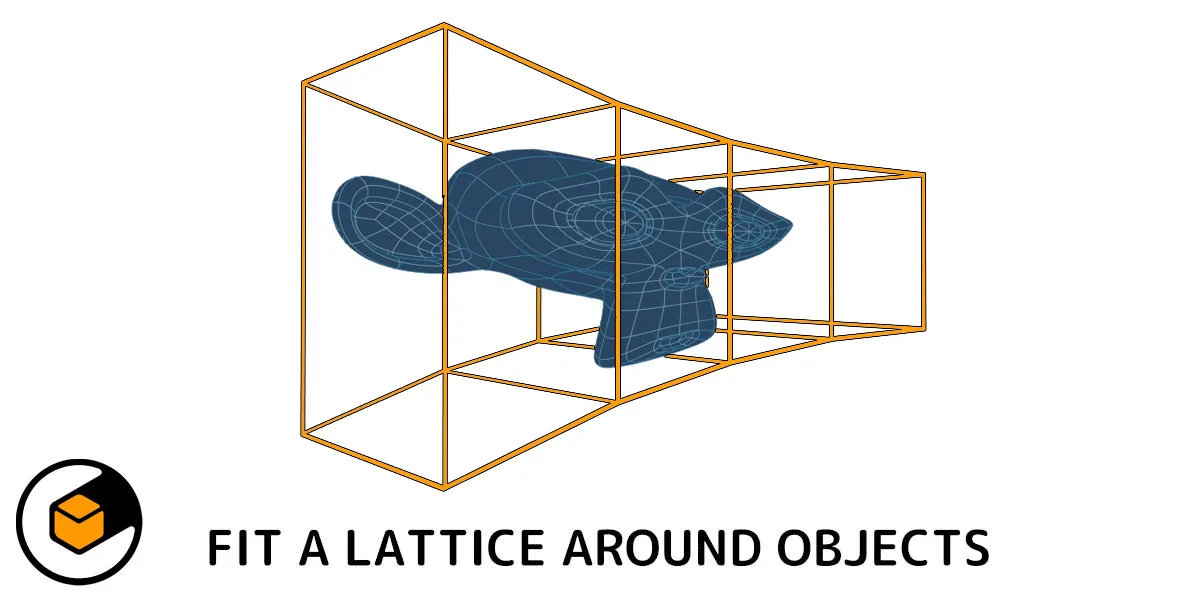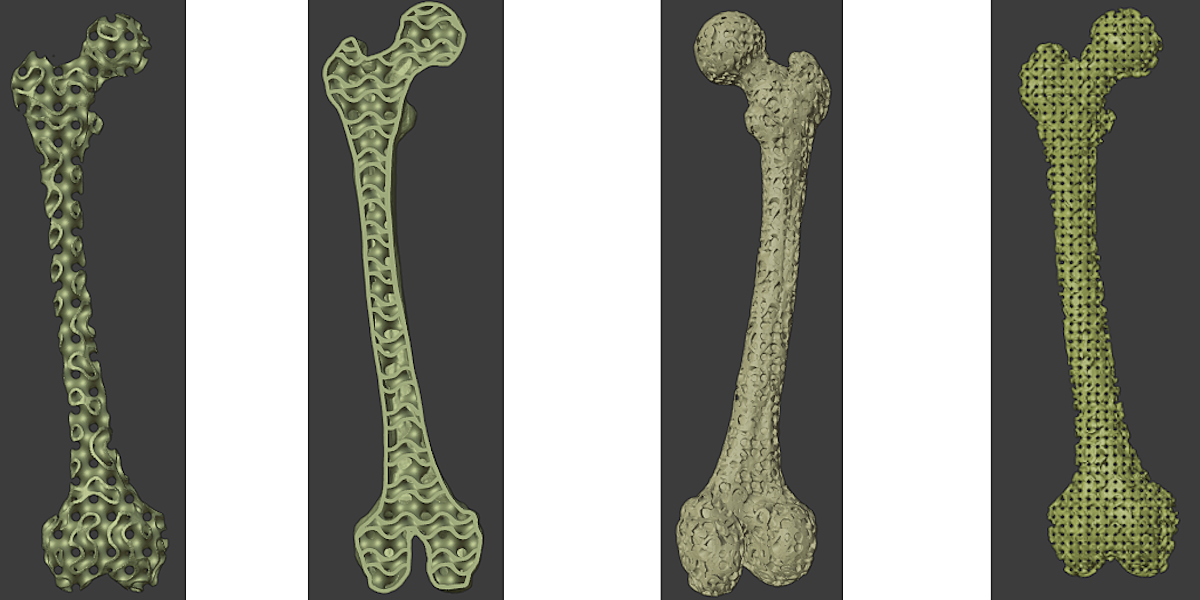
Confine_Lattice_Femur_Bone is a Blender project made up of four .blend files, each containing a Python script that generates a lattice structure confined to femur-shaped geometry. The files demonstrate different lattice and surface results for modeling work related to bioimplants and additive manufacturing.
What the four files produce
lattice_in_boneplaces a lattice within the femur bone volume.lattice_with_skin_in_boneadds a wall with thickness to the outer boundary.surface_texture_on_boneapplies surface texturing to the bone surface.Porus_boneproduces a femur bone with a porous structure.
To run a file, open it in Blender and use the Run Script button in the Text Editor. The product documentation describes the script controls, including the initial model dimensions, lattice spacing and size, boundary bounds, thickness, and shape coefficients.
Script controls and tradeoffs
mainmodel sets the model dimensions used for initial lattice generation. steppercent sets the lattice width as a percentage of the interval length. For an interval of 100, the documented value 0.05 gives a width of 5 units. Lower values produce a closer approximation to the mesh but require more computing time. If generation takes too long, the product FAQ suggests increasing this value, such as changing 0.03 to 0.05.
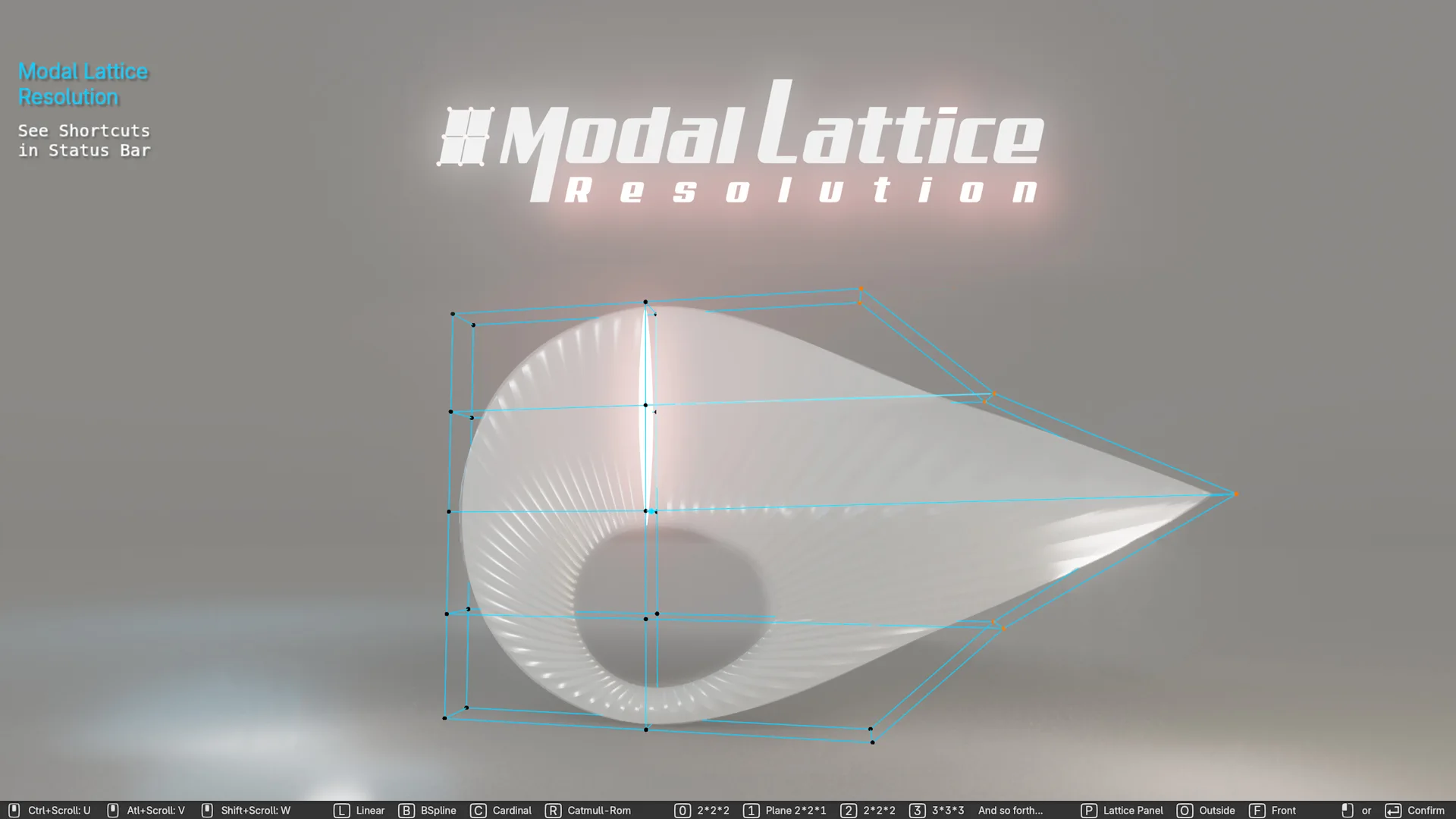
boundpercent expands the bounding box used for the grid; 1.2 means dimensions 20% larger than the object in each direction. A higher lattice_size places more, smaller lattice units in the [-1,1] volume. lattice_thickness controls the thickness between offset lattice surfaces, while lattice_coefficients change the shape without changing its topology. The product FAQ also notes that a rough lattice can be refined by reducing steppercent.
Compatibility and scope
The listing names Blender 2.8, 2.81, 2.82, and 2.83. Those are the versions documented for the files; compatibility with later releases is not specified in the supplied product information. The listing identifies the license as GPL. Its documentation describes geometry generation and script parameters, but does not establish manufacturing validation or clinical suitability.