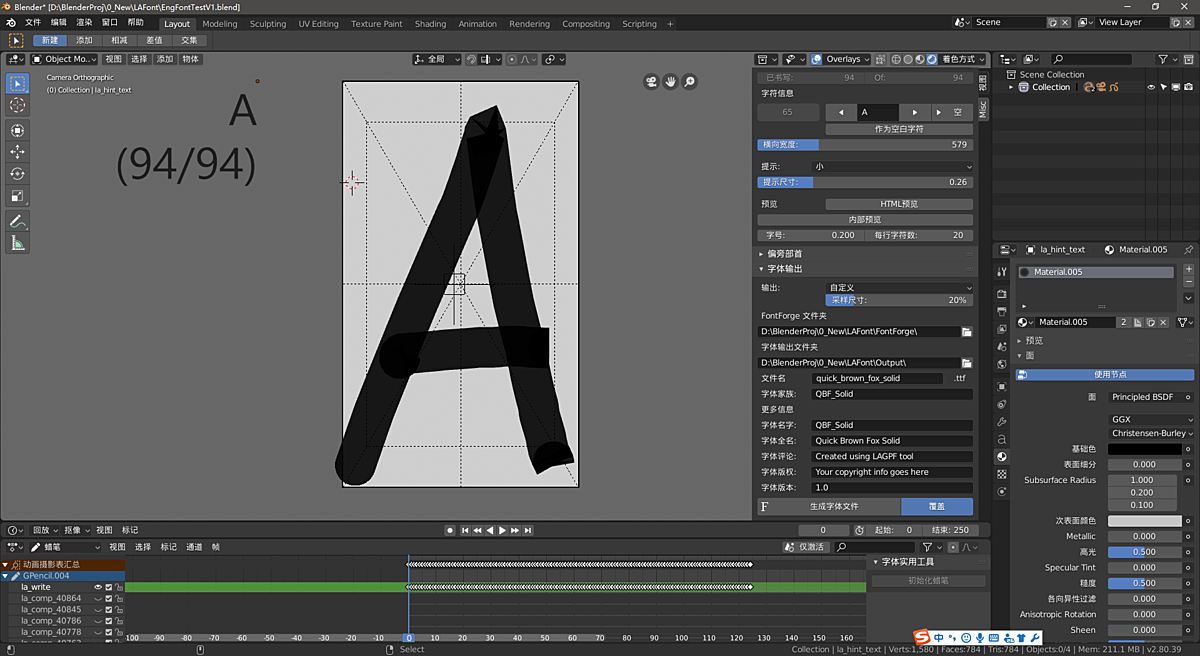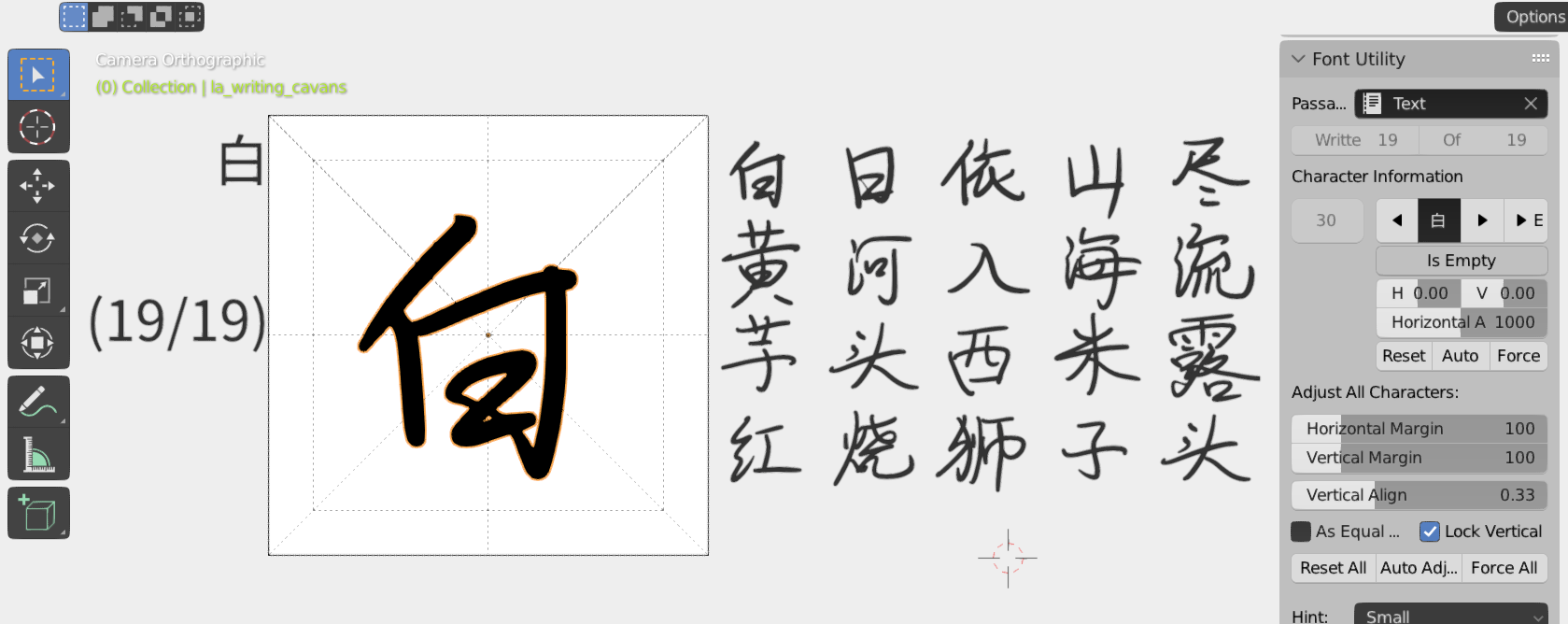
Grease Pencil To Font - Now, also called LAGPF, is ChengduLittleA’s font-making utility for Blender. Choose Unicode characters, draw each glyph with Grease Pencil, and export the set as a TrueType (TTF) font. You can work from a passage and select only the characters you need; LAGPF keeps track of characters already in the character table so you do not have to draw them again.
Work with related characters
LAGPF includes a character component system with a Chinese component table that can also help with Japanese characters. Linked component data lets edits carry across related glyphs. Five included character sets cover GB2312 Simplified Chinese, Latin and Latin extended, Japanese kana, Full Width Symbols, and CJK Symbols.
The tool uses Unicode encoding, and the creator says it can be used to draw characters in the Unicode table, including emoji. You can select a small set of glyphs for a specific project instead of preparing a complete character table.
Edit glyph strokes and center margins
Sculpt and stroke edits synchronize with the character table. Grease Pencil modifiers can be used to give characters a consistent style. The listing also describes a tiling feature for translating images into glyphs, plus automatic margin centering with an option to lock the vertical direction for Latin characters.
Check Blender compatibility and documentation
The product listing’s latest dated update is October 27, 2021. It says the script should run smoothly on Blender 2.93 LTS and Blender 3.0 daily builds; the marketplace details list Blender 2.93. These are the versions documented in the available listing, so check the product page for current information before installing it on a newer Blender release.
The documentation page links to an English comic-style manual and additional information from the creator. The creator also states that LAGPF does not add digital identification data to exported fonts.
Who it suits
LAGPF is for Blender users who want to draw custom glyphs and export a font, including projects that need selected Latin, Chinese, Japanese, or other Unicode characters. Its component tools are useful when related characters share parts, while direct stroke editing gives artists control over the drawn forms.