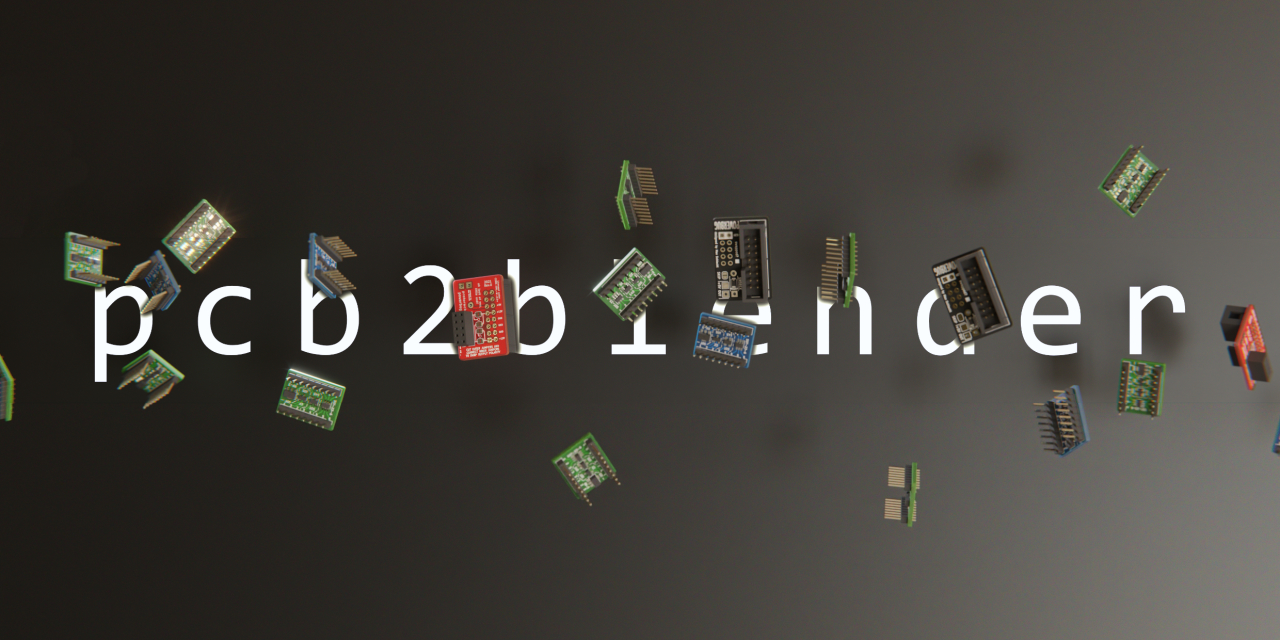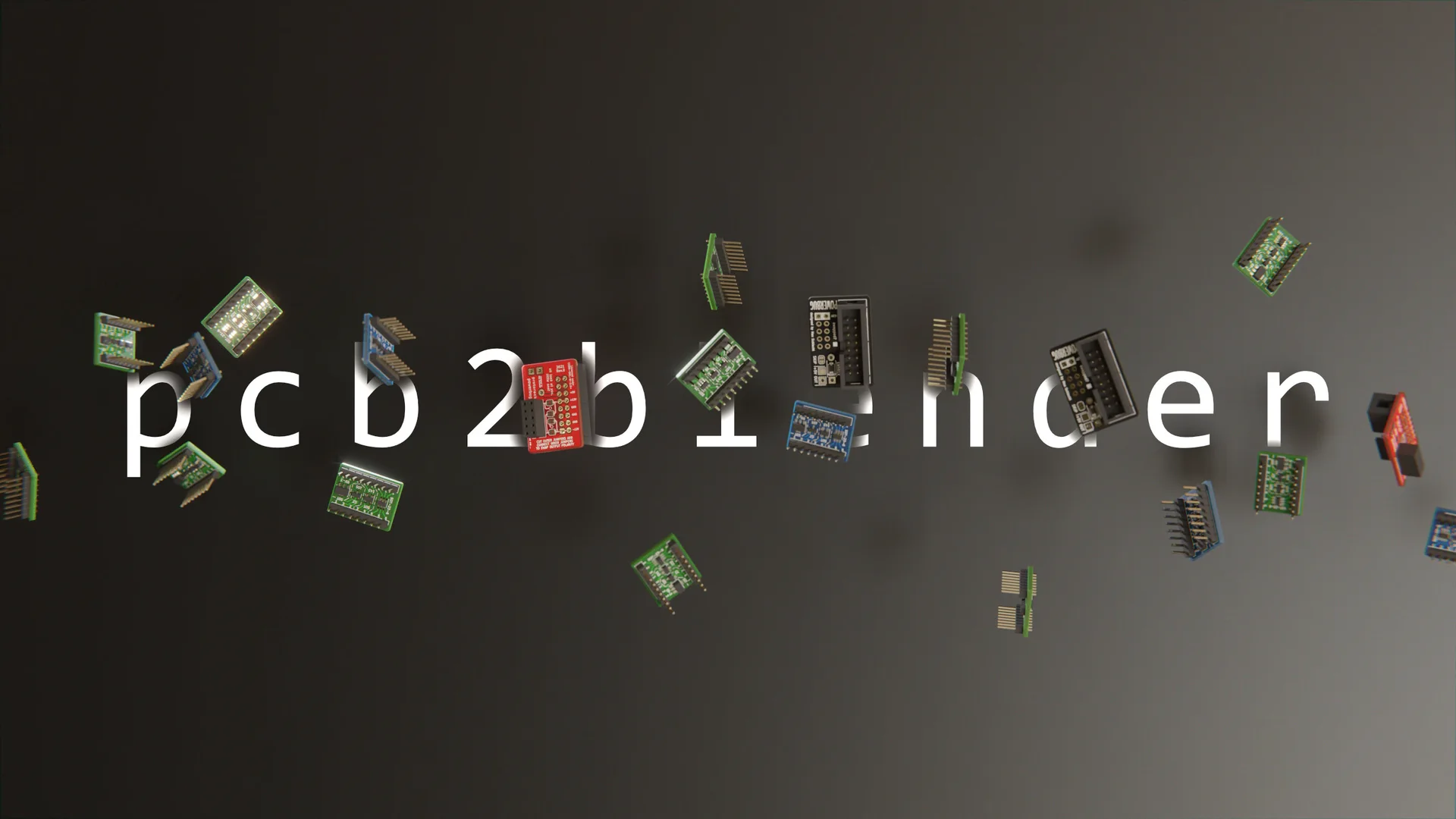
PCB 3D Importer brings a KiCad board into Blender through the pcb2blender workflow. Export the board from KiCad’s pcbnew as a .pcb3d file, then import it in Blender to compose and light a product render. The project describes the workflow for work-in-progress boards as well as renders updated after board revisions.
What PCB 3D Importer does
The add-on handles the Blender side of a KiCad-to-Blender transfer. A separate exporter in KiCad creates the .pcb3d file; PCB 3D Importer reads that file in Blender. This gives electronics designers a path from a PCB project to a render scene without treating Blender as the board-design tool.
Set up the KiCad-to-Blender workflow
- In KiCad, open Tools > Plugin and Content Manager > Plugins and install the
pcb2blenderexporter. - In Blender, open Edit > Preferences > Get Extensions, find PCB 3D Importer, and install it.
- In KiCad’s pcbnew, use Export to Blender (.pcb3d) to create the transfer file.
- In Blender, choose File > Import > PCB (.pcb3d) and select the exported file.
The pcb2blender project instructions document the exporter and importer installation paths. After import, continue in Blender with scene composition, lighting, and rendering.
Updating a render after board changes
When a board changes, export it again from pcbnew and import the revised .pcb3d file for another render. The project describes this workflow as suitable for late revisions and work-in-progress boards. Its documentation does not describe automatic synchronization between an open Blender scene and the KiCad project.
Blender compatibility and license
The listed version 2.17.5 supports Blender 5.1.0 and has an exclusive upper limit of 5.2.0, so its declared range is Blender 5.1.x. Its extension record lists Windows x64 and ARM64, Linux x64, and macOS x64 and ARM64 packages. The add-on is maintained by Bobbe and released under GPL-3.0-or-later. The Blender Extensions listing has the release details; check it for compatibility before installing a later version.
PCB 3D Importer suits KiCad users who want to create or refresh product renders in Blender. It requires both the KiCad exporter and the Blender importer, and the Blender extension’s declared file permission covers importing .pcb3d files from disk.