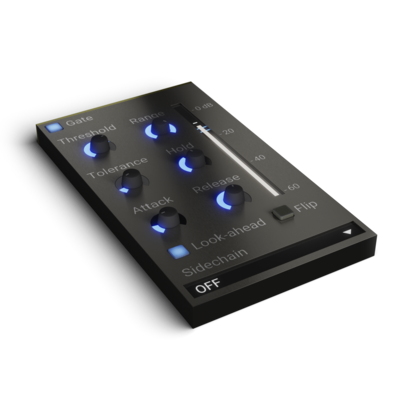
What Gate does
Kilohearts Gate is a threshold-controlled audio gate for reducing low-level noise, shortening reverb tails, and shaping dynamics. It opens when the input level passes the threshold. Tolerance sets how far below that threshold the level must fall before the gate closes.
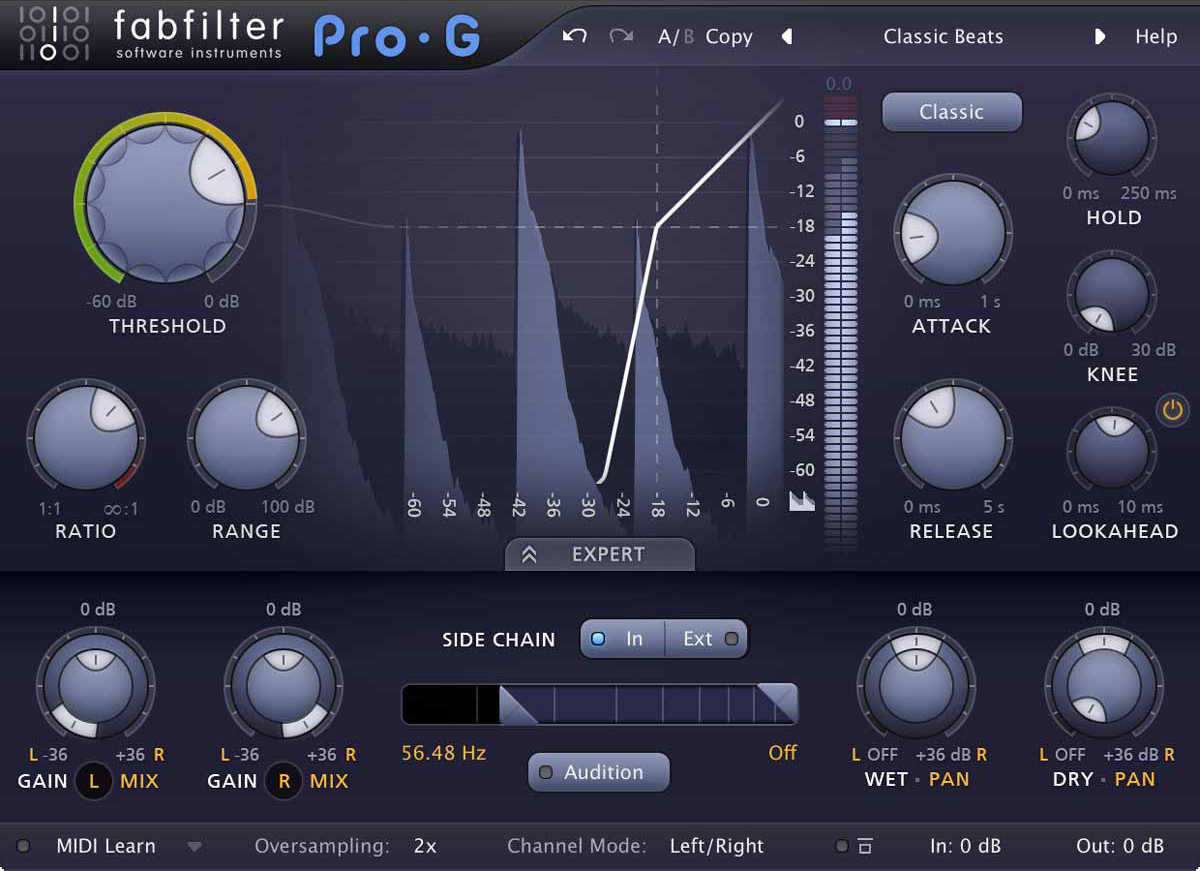
Attack controls how quickly the gate opens, Hold sets its minimum open time, and Release controls how quickly it closes. Range sets how much the signal is attenuated while closed. The optional 5 ms look-ahead can let transients through, with added latency. A VU meter shows the input level, threshold, tolerance, and current gate state.
Cleanup and sidechain workflows
For a noisy recording, set the threshold so the wanted sound opens the gate while quieter noise falls below it. Use tolerance to set the closing point, then adjust attack, hold, release, and range to shape how the gate responds. The same controls can shorten reverb tails or make a beat more sharply gated.
For rhythmic ducking, Gate can respond to an external sidechain, such as a kick controlling when a lead is reduced. Flip reverses the gate's behavior: it attenuates the signal while the gate is open instead of while it is closed.
Plugin formats, hosts, and access
Use Gate as a regular plug-in in a DAW that supports VST2, VST3, AAX, or Audio Unit. It can also run as a Snapin in Kilohearts hosts such as Phase Plant, Multipass, and Snap Heap. Kilohearts lists Gate in its Essentials collection, which is free with an account. Snapin Hosts are available separately.
Kilohearts' system requirements specify an x86 64-bit processor with SSE3 support; Apple M processors are supported on macOS. Kilohearts says it cannot support operating-system versions their manufacturers no longer support. The Kilohearts versions require no licensing hardware. Versions installed through Slate Digital use iLok and require a valid Slate Digital license.
Who it suits
Gate fits producers who need level-based cleanup, reverb-tail control, or sidechain ducking with adjustable timing and attenuation. Its threshold determines when audio passes, so it is most useful when the wanted sound and quieter material fall on different sides of a workable level setting.