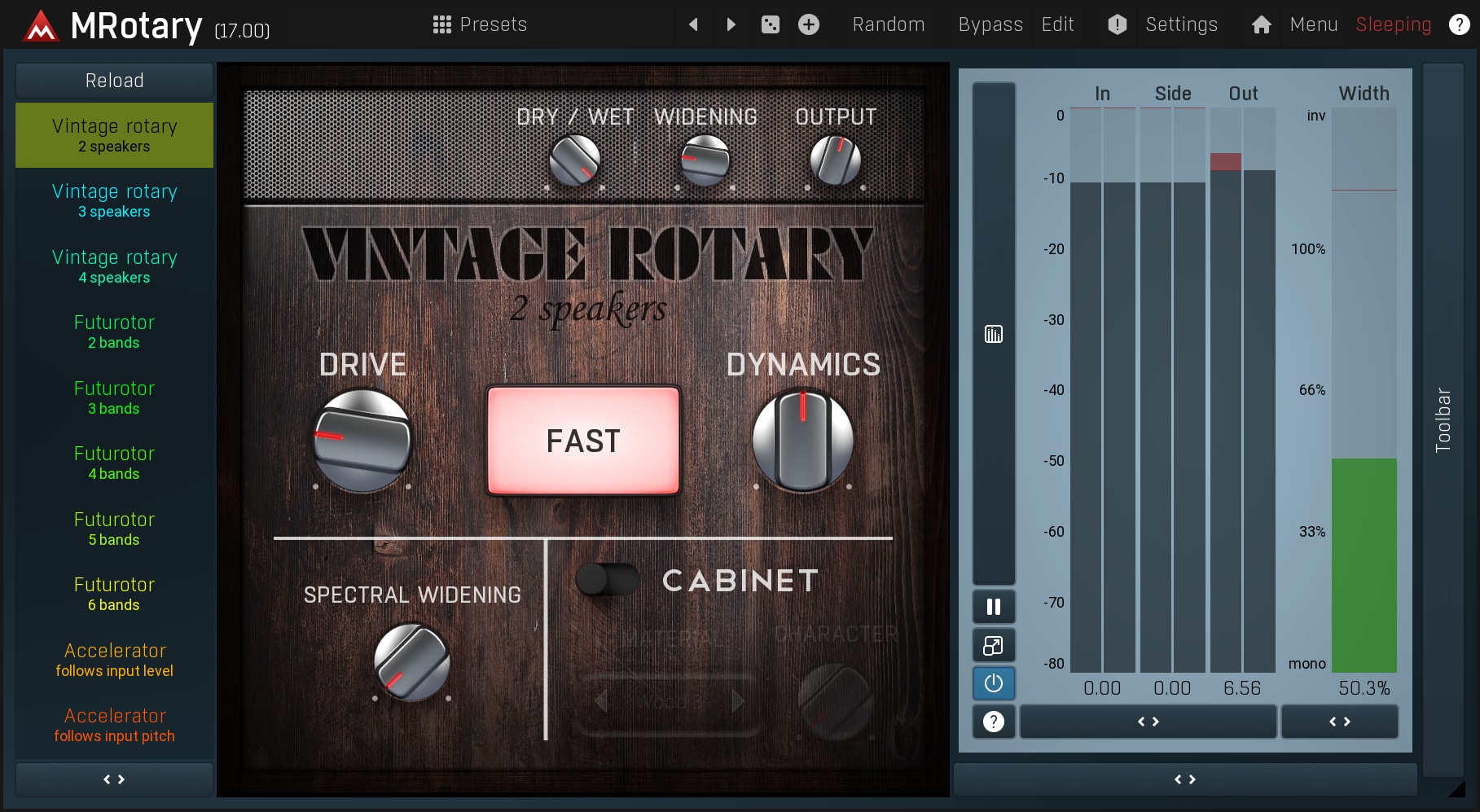
MVintageRotary is an effect plugin that simulates the rotating bass speaker and horn of a vintage rotary cabinet. MeldaProduction describes it for organ, keyboard and guitar sounds, and the manual exposes controls for motion, stereo width, cabinet balance, equalization and amp distortion. The feature list also documents automatic gain compensation, which adapts to settings to keep output as loud as input, and a safety brickwall limiter that keeps output below 0 dB. It suits musicians and producers who want to shape rotary movement beyond a basic slow/fast switch.
Shape the rotary motion
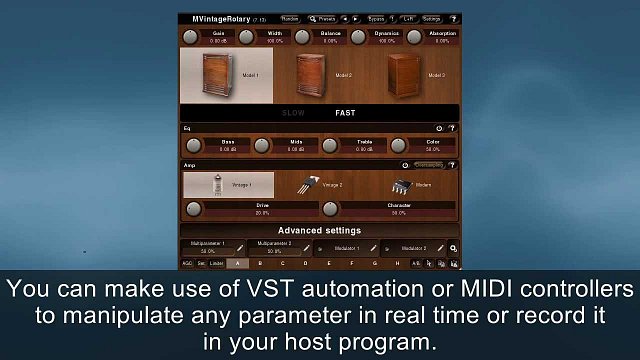
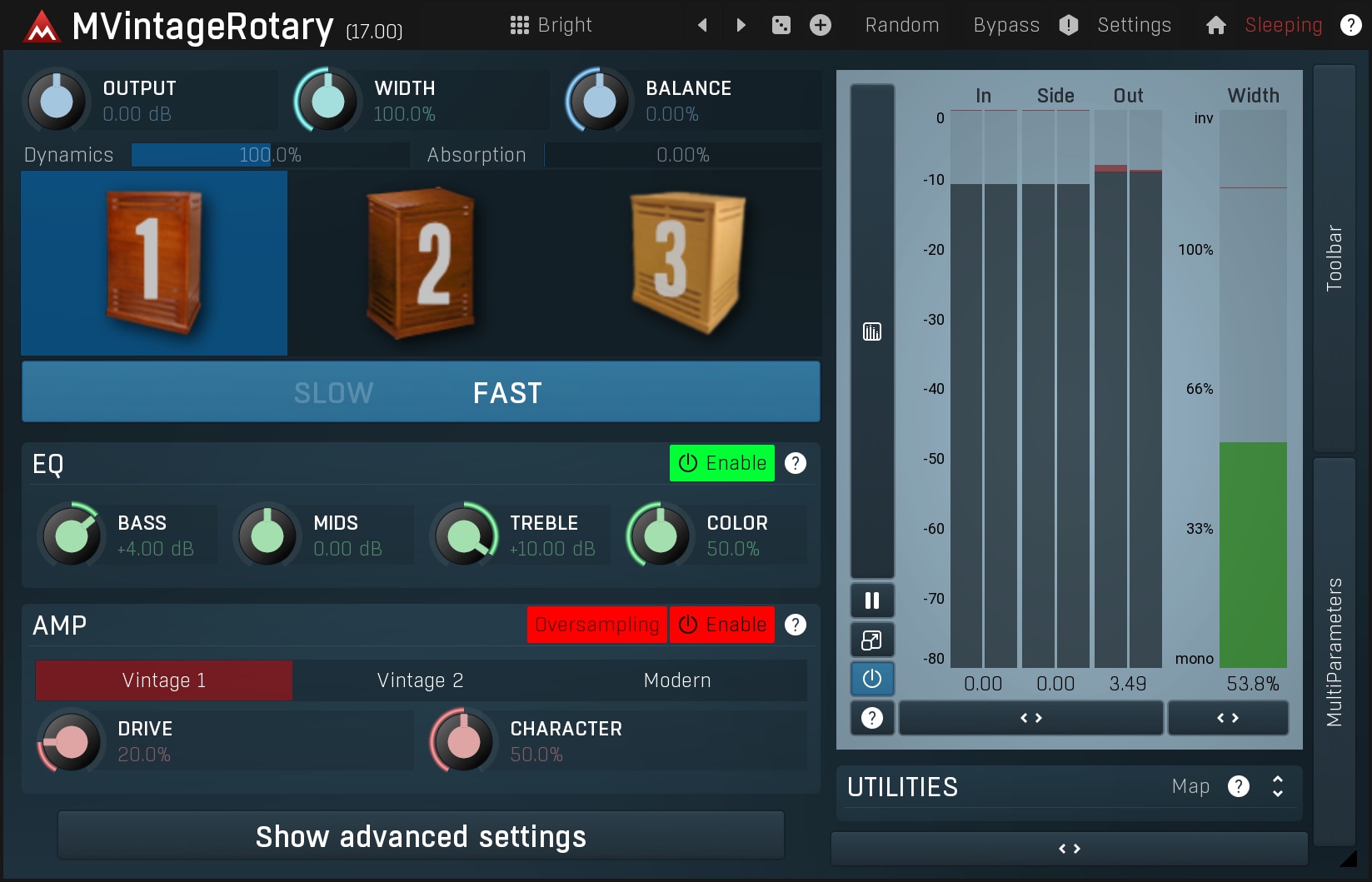
Switch between slow and fast rotation, then adjust the rates and acceleration times. The bass speaker and horn can use different speeds and acceleration, and their rotation directions can be reversed independently. Host-tempo synchronization is available for the slow and fast rates, as well as acceleration.
The Dynamics control adjusts the amount of dynamic behavior; lower settings diminish it, usually making the natural tremolo sound reduced. Width changes the simulated microphone separation and can widen the output. Balance adjusts how much signal passes through the bass rotor and horn. Absorption shortens the simulated cabinet response, but the manual warns that changing it introduces artifacts, so it should not be automated or modulated.
Set the tone and drive
An integrated equalizer provides bass, mids and treble controls, with a Color setting that shifts the EQ focus between the middle frequencies and the bass and treble extremes. The amp simulator adds the smooth distortion associated with rotary cabinets. Type, Drive and Character adjust its sound; oversampling can reduce aliasing at higher drive settings, with a substantial increase in CPU use.
Control changes and compare settings
Use MIDI learn to assign controllers to parameters. The slow/fast switch can also be mapped to a modulation wheel or sustain pedal. Two modulators can operate as LFOs, level followers, triggered ADSR envelopes, randomizers or pitch detectors, and can respond to a sidechain. This supports workflows such as making rotation change over time or increasing drive with playing level.
For sound selection, A to H slots let you keep and switch between up to eight settings. The first four can be morphed with an X-Y pad, which helps when comparing presets or blending two rotary treatments.
Compatibility and licensing
MeldaProduction lists 64-bit VST, VST3 and AAX support for Windows 10 or 11. On macOS 10.14 or later, it lists VST, VST3, AU and AAX, with Intel, AMD and Apple Silicon processors supported. Linux is not directly supported; the vendor says running the plugins through Wine may be possible. Check the MVintageRotary support page for requirements and installation information. A trial is available from the product page.
The vendor says purchased software receives free updates for life. The MVintageRotary quick start guide covers presets, detailed controls and meters.