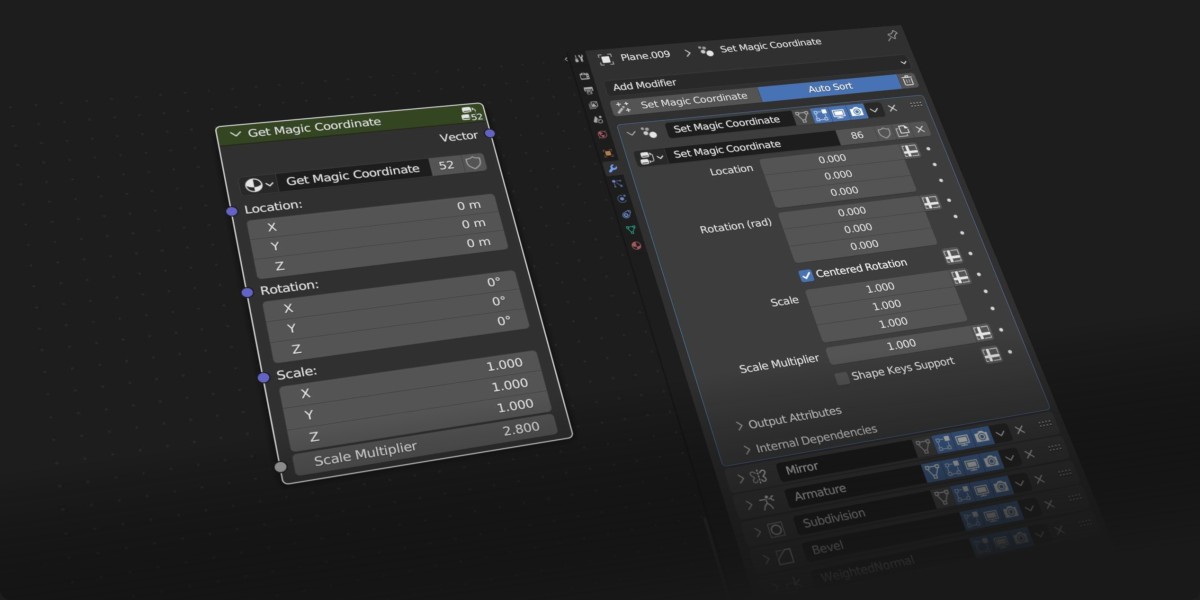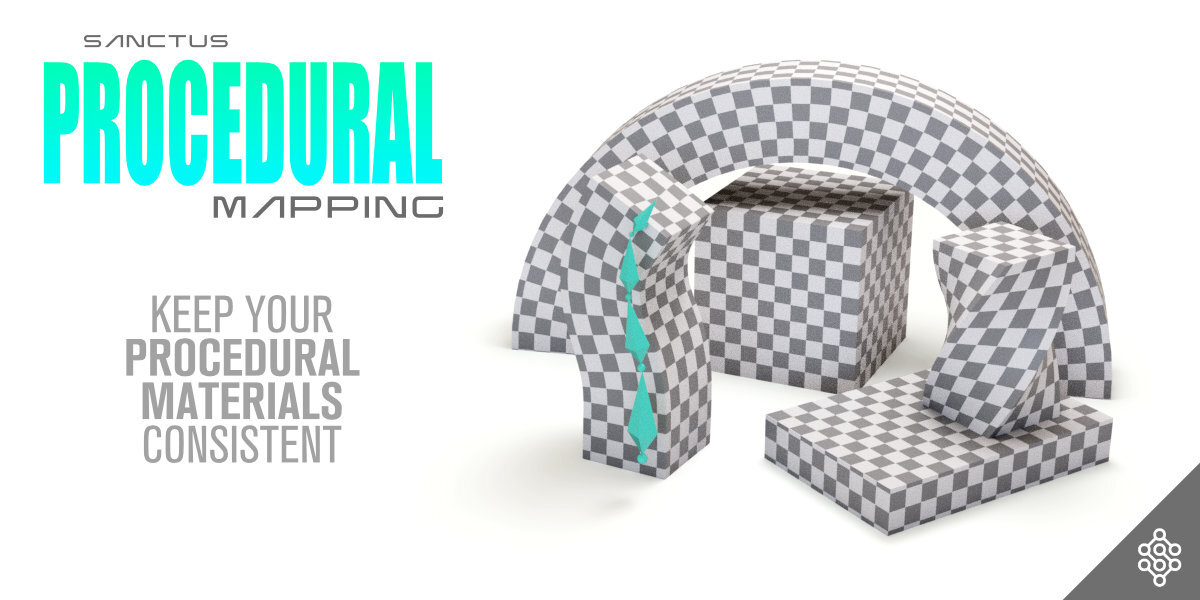
Sanctus Procedural Mapping is a Blender add-on for node-based procedural materials that shift or distort when an object moves or changes shape. It replaces Texture Coordinate nodes to keep the pattern aligned with the surface during animation and deformation. It is designed for procedural shading, rather than UV-wrapped image textures.
Consistent mapping across objects
Objects that share a material keep the same texture scale even when their dimensions differ. The add-on preserves aspect ratio automatically, with an optional parameter to compensate for unapplied scale. This helps maintain a consistent look across assets that use the same procedural material.
Rigging, shape keys, modifiers and Geometry Nodes
- During rig animation, the texture stays fixed to the object surface.
- With shape keys, the texture stretches with the mesh as it changes shape.
- Coordinates adapt to non-destructive modifiers such as Twist, Bend and Displace.
- Mapping remains correct on objects modified with Geometry Nodes.
These procedural materials can be animated and deformed in real time without baking.
Compatibility and setup
The developer's product page lists Blender 4.5 or newer. Superhive's overview and details show different Blender ranges. Check the developer's product page or Superhive listing for compatibility with your Blender release. The listing identifies Cycles and Eevee support, a GPL license, and permission for commercial use.
The documentation covers installation, new and existing materials, node parameters, limitations and best practices, and includes a demo scene. The add-on fits projects where a procedural pattern needs to follow a mesh through rigging or deformation.