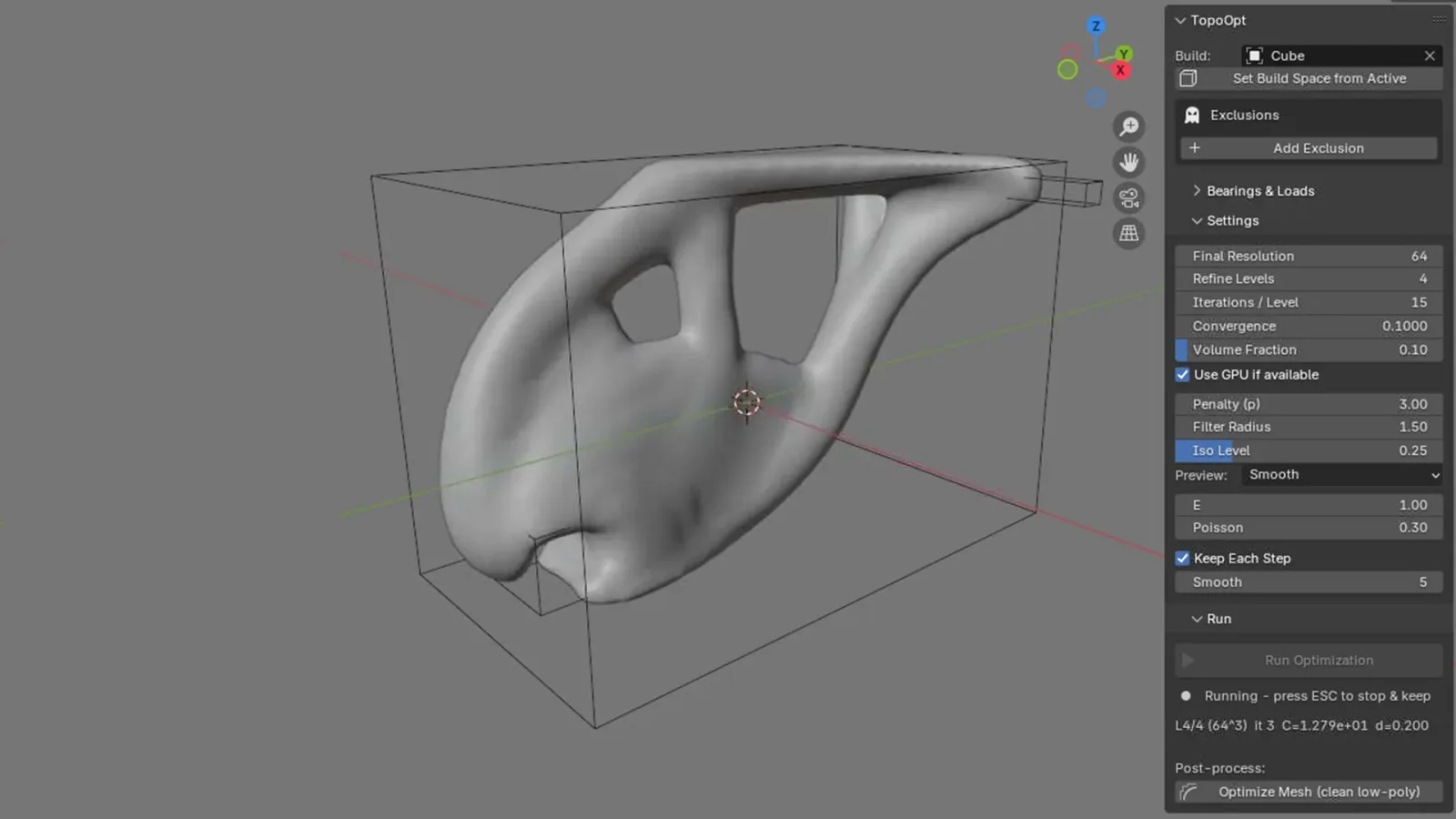
Blendtopo is a Blender add-on for SIMP structural topology optimization of solid mesh parts. Define a build space, set bearings as fixed supports, and apply loads as force vectors. The solver uses those conditions to shape a structure within the allowed region. Optional exclusions mark areas that need to stay clear, such as holes or clearances.
Set the design conditions
The build space limits the region considered during optimization. Bearings anchor the part along selected axes, while loads describe the forces acting on it. Exclusions reserve volumes where material should not be placed.
Settings include Volume Fraction, Filter Radius, Final Resolution and Refine Levels. Filter Radius sets a minimum feature size. These controls let you adjust the optimization setup to suit the part and the level of detail you need.
Watch the shape refine
The shape develops in the viewport as Blendtopo moves from coarse to finer resolution. Press Esc to stop and keep the latest result. Continue resumes from that result with more iterations, so you can inspect the current form before deciding whether to refine it further.
Convert the result to mesh geometry
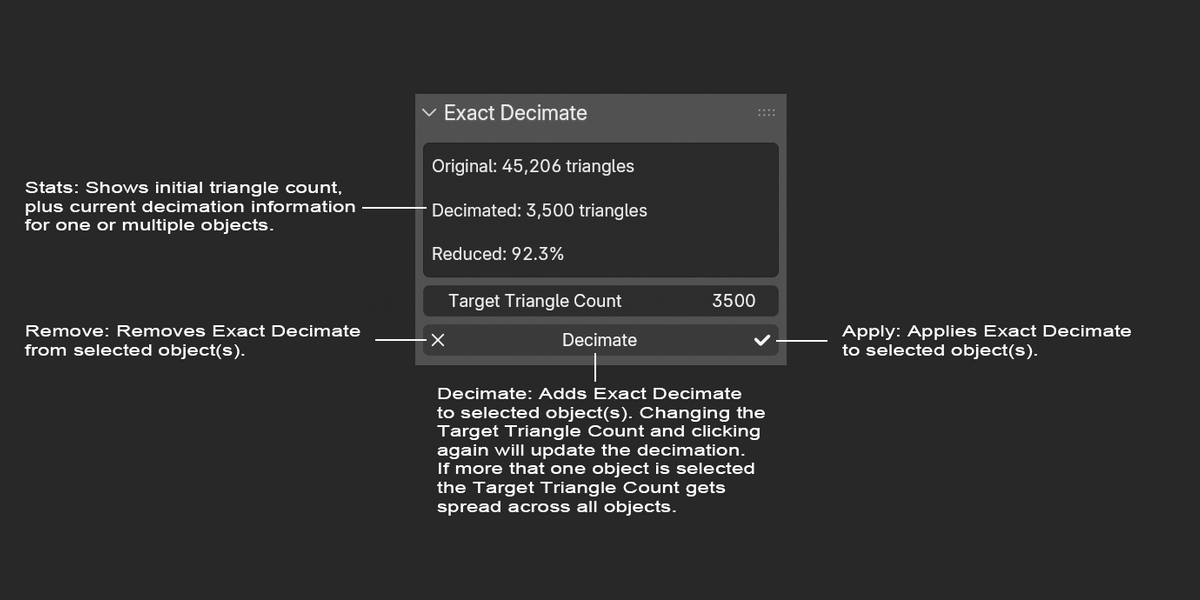
Optimize Mesh converts the optimized result into a low-poly, watertight body. Adjustable smoothing and decimation controls help shape the output for export or 3D printing. A watertight mesh does not establish load capacity, and the available product information provides no load-test results. Evaluate the geometry against the requirements of its intended use.
Solver and hardware
The solver is matrix-free and restricted to the build-space region. It warm-starts each optimization step and refinement level, adapts its solve tolerance, and uses a geometric multigrid V-cycle preconditioner.
Blendtopo can run on the CPU. If CuPy and a CUDA-capable GPU are available, it uses the GPU automatically and falls back to CPU otherwise. The core workflow uses Blender's bundled NumPy and built-in modifiers, so it has no required external packages. CuPy is optional for GPU acceleration.
Compatibility and permissions
The Blender Extensions API lists Blender 4.2.0 as the minimum version and GPL-3.0-or-later as the license. It also declares file access for exchanging data with helper subprocesses during optimization. Check the official Blendtopo listing for current release and platform package details.