Dual VCF is a ToneBoosters audio filter effect with 68 analog filter models and two filter sections. It also includes multi-resonant filters, an envelope follower, and an editable LFO for moving filter settings over time. ToneBoosters’ product page lists support for up to 16-channel spatial audio.
Shape sound with two filter sections
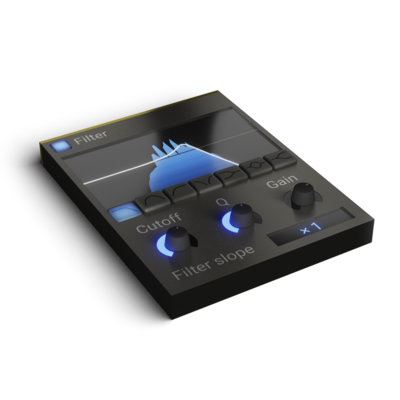
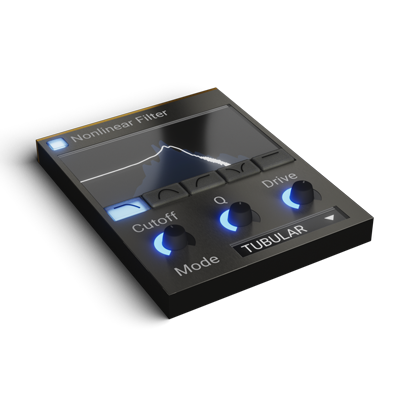
Set the filters to run in series or in parallel. The filter choices are grouped into categories such as low-pass, band-pass, and high-pass. Each section has cutoff and resonance controls, a dry/wet mix, and two forms of nonlinear processing: Drive adds saturation within the filter, while Post applies nonlinear processing after it. Supercharge mode increases resonance and character. A response graph shows the filter curve, and dragging its point adjusts the cutoff.
This setup suits audio work where a static filter is not enough: for example, cascading two stages for sequential shaping or using parallel routing for a different filter arrangement. The product page also lists preset management, A/B switching, undo and redo, and multiple simultaneous instances.
Make the filter respond to audio or rhythm
The envelope follower can modulate cutoff and resonance on either filter section. Attack and release settings control how quickly the modulation responds to increases and decreases in the incoming signal. Use it when the filter should move with the source audio’s level.
For repeating movement, edit the LFO waveform by dragging or adding nodes, then set its depth for cutoff or resonance on either section. Dual VCF offers beat sync and beat trigger when the host supports them, as well as free-running and timeline-synced modes. In beat sync, set the cycle length in beats; ToneBoosters’ manual gives four beats as an example. The output section includes a VU meter, pre-limiter gain, and an adjustable peak limiter.
Compatibility and license
The July 2026 v2.1.8 desktop download listings specify these DAW-host requirements (the product page also lists a standalone format): Windows 10 or later with a 64-bit DAW that supports VST, VST3, or AAX and an Intel or AMD SSE2 processor; macOS 10.13 or later with a 64-bit VST, VST3, AAX, or AU host and an Intel or Apple Silicon processor; or Linux with a 64-bit VST or VST3 host, an Intel or AMD SSE2 processor, and glibc 2.31 or later. The installer page has the platform details. ToneBoosters also lists an iPad version compatible with iPhone; it requires an AUv3-compatible host.
The product page lists the desktop license at €19 as personal and perpetual, for use on up to four computers. The license terms specify one licensee and up to four personal desktop computers. Desktop licenses do not cover mobile platforms, so the iPad version needs its own mobile license.