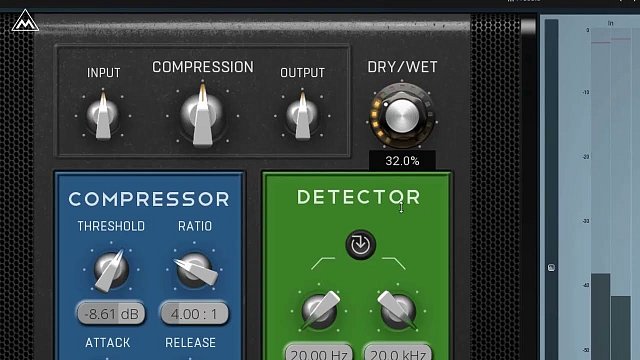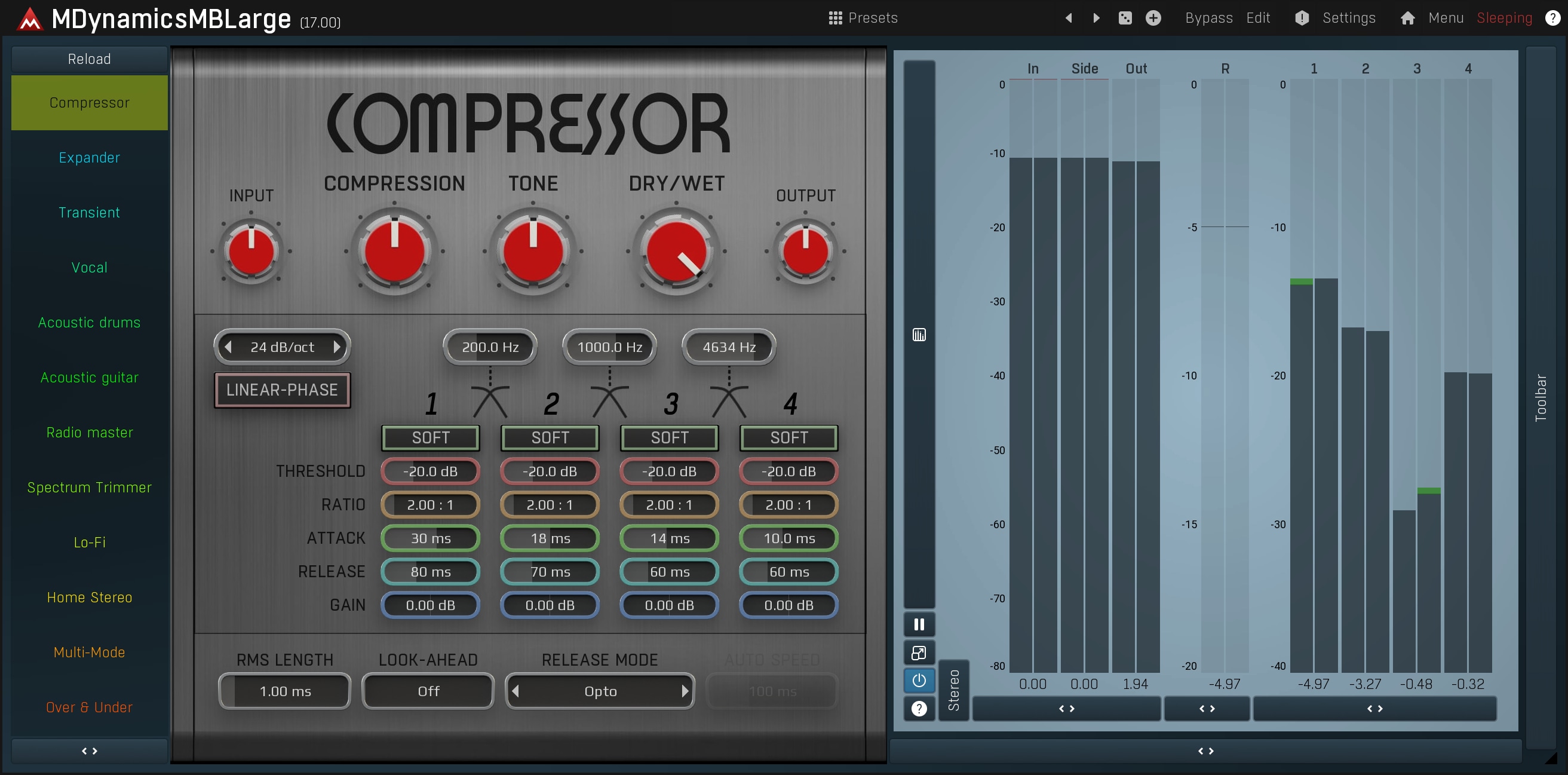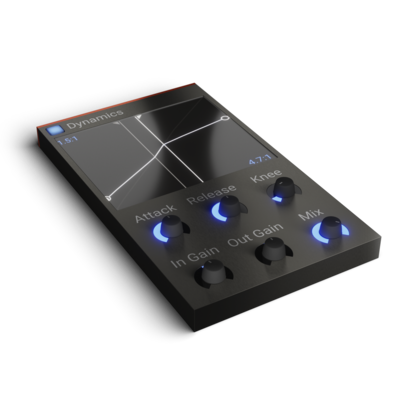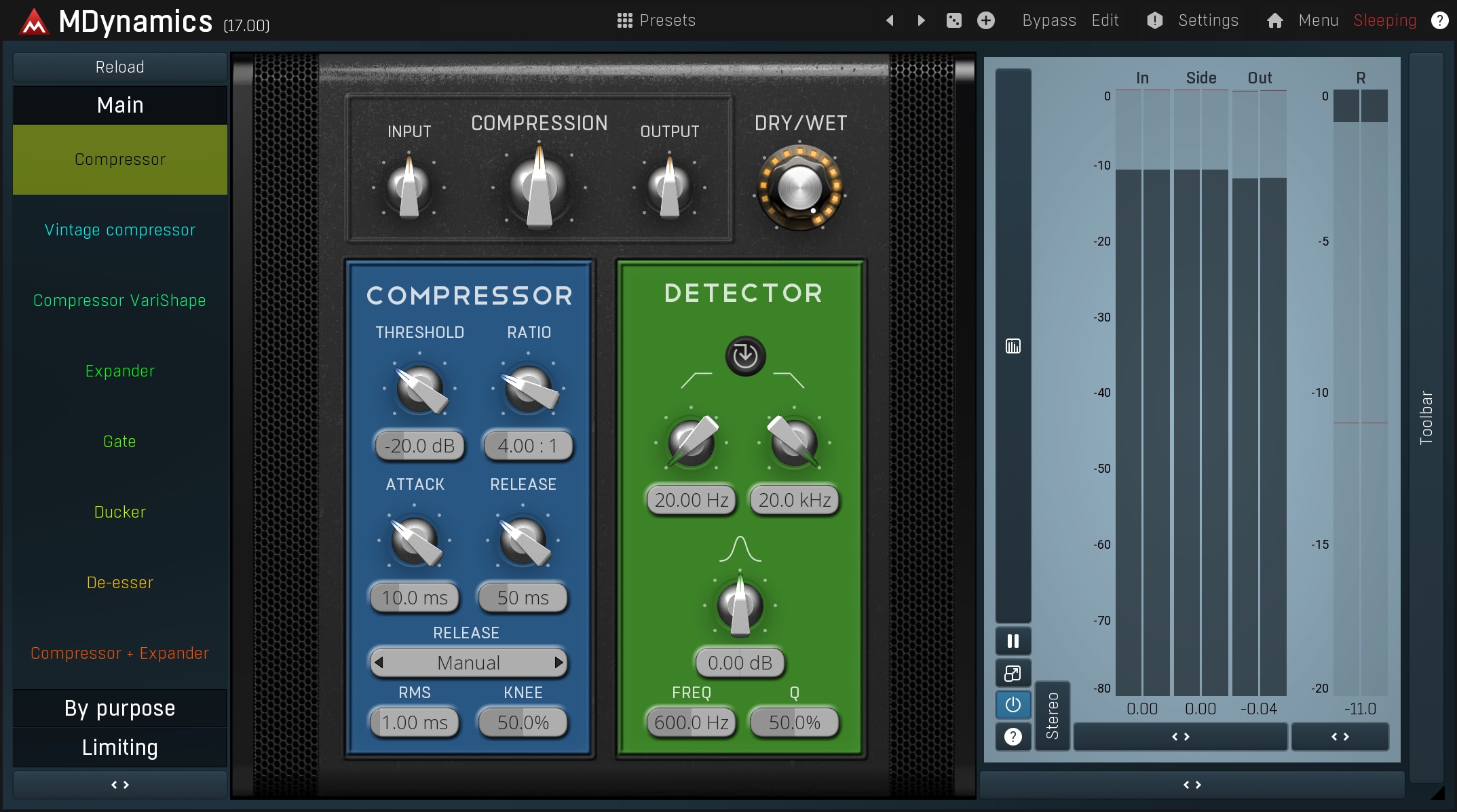
MDynamics is MeldaProduction’s single-band dynamics processor for compression, expansion and gating. Two compressor/expander sections can be combined with the gate, and a custom processing curve lets you shape how input levels map to output levels. MeldaProduction describes it as suitable for mastering and other production work.
Shape how the detector responds
The detector determines when and how strongly dynamics processing reacts. You can adjust its attack and release behavior, use manual or automatic release modes, and choose peak or RMS detection. Custom attack and release shapes provide more control over the detector’s response, while look-ahead lets it react before the audio reaches the processor. Look-ahead adds latency, so consider that when timing matters in a session.
Side-chain filtering changes what the detector listens to. For example, a filtered detector can focus compression on vocal sibilance or let a low-pass filter make the processor respond mainly to a kick drum. You can also route a separate signal into the side-chain input and enable that input for level detection. The side-chain equalizer affects the detector signal, not the processed output’s tone.
Useful mixing and comparison controls
Set the dry/wet control to blend processed and unprocessed audio for parallel compression without creating a separate routing path. The plug-in also provides automatic gain compensation, which adjusts output loudness as settings change. For comparing alternatives, its A-to-H slots store up to eight settings; the first four can be morphed with an X-Y pad.
An Easy screen presents a smaller set of controls for common adjustments. Switch to the Edit screen to reach the full parameter set. The Easy screen also uses multiparameters, so you can build a simpler control layout for a saved preset.
Channel modes and compatibility
MDynamics supports mono, stereo, separate left and right, and mid/side processing, plus up to eight surround channels and up to 64 ambisonic channels. Check your host’s routing and plug-in format support before relying on surround or ambisonic operation.
- Windows: Windows 10 or 11, 64-bit, with a VST, VST3 or AAX host and an Intel or AMD processor with SSE2 support.
- macOS: macOS 10.14 or newer, 64-bit, with a VST, VST3, AU or AAX host. Intel, AMD and Apple Silicon processors are listed.
- Linux: Not directly supported. Running through Wine may be possible if the .wine/drive_c/windows/Fonts/ directory contains Microsoft True Type Fonts.
The license is assigned to a person, who can use it on their own computers. Activation uses a license file and does not require a dongle or internet access. MeldaProduction’s product page offers a trial, which can help check compatibility with a particular system and host. Its features page says purchased software includes free updates.
See the MDynamics feature list, support page, quick start guide and system requirements for current product details.